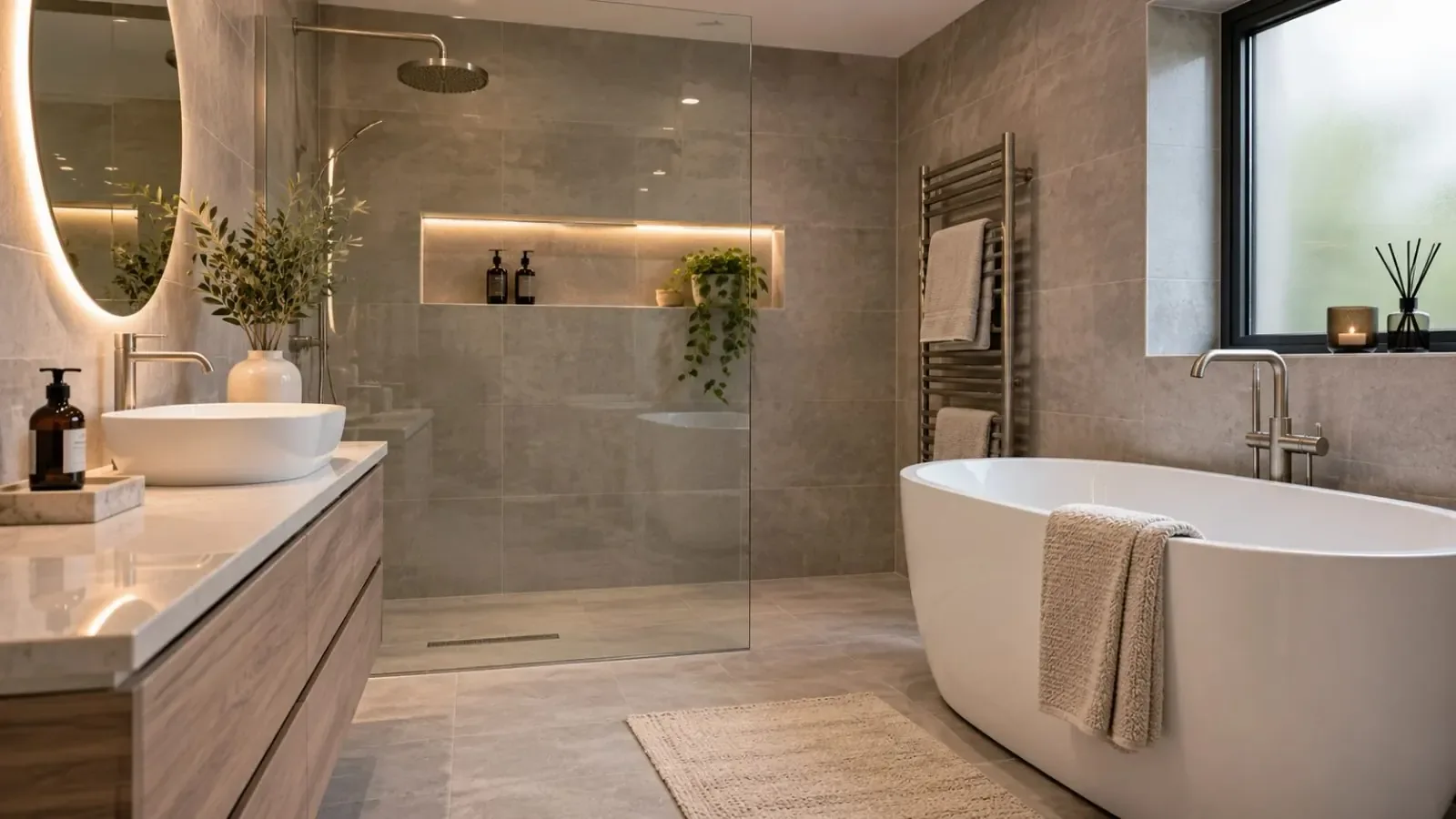
Refresh Your Existing Bathroom
Bathroom Refurbishment in Prestwich
Give your current bathroom a thoughtful refresh.
Refresh Your Existing Bathroom
Give your current bathroom a thoughtful refresh.
A bathroom refurbishment can be a sensible option when the existing layout works but the fittings and finishes are starting to show their age. Rather than automatically changing every aspect of the room, we consider what can stay, what needs replacing and what would make the greatest improvement.
Bathroom Renovations Prestwich provides refurbishment services for homeowners who want a cleaner appearance, updated fixtures or easier-to-maintain surfaces. The objective is to improve the room without introducing unnecessary complexity.
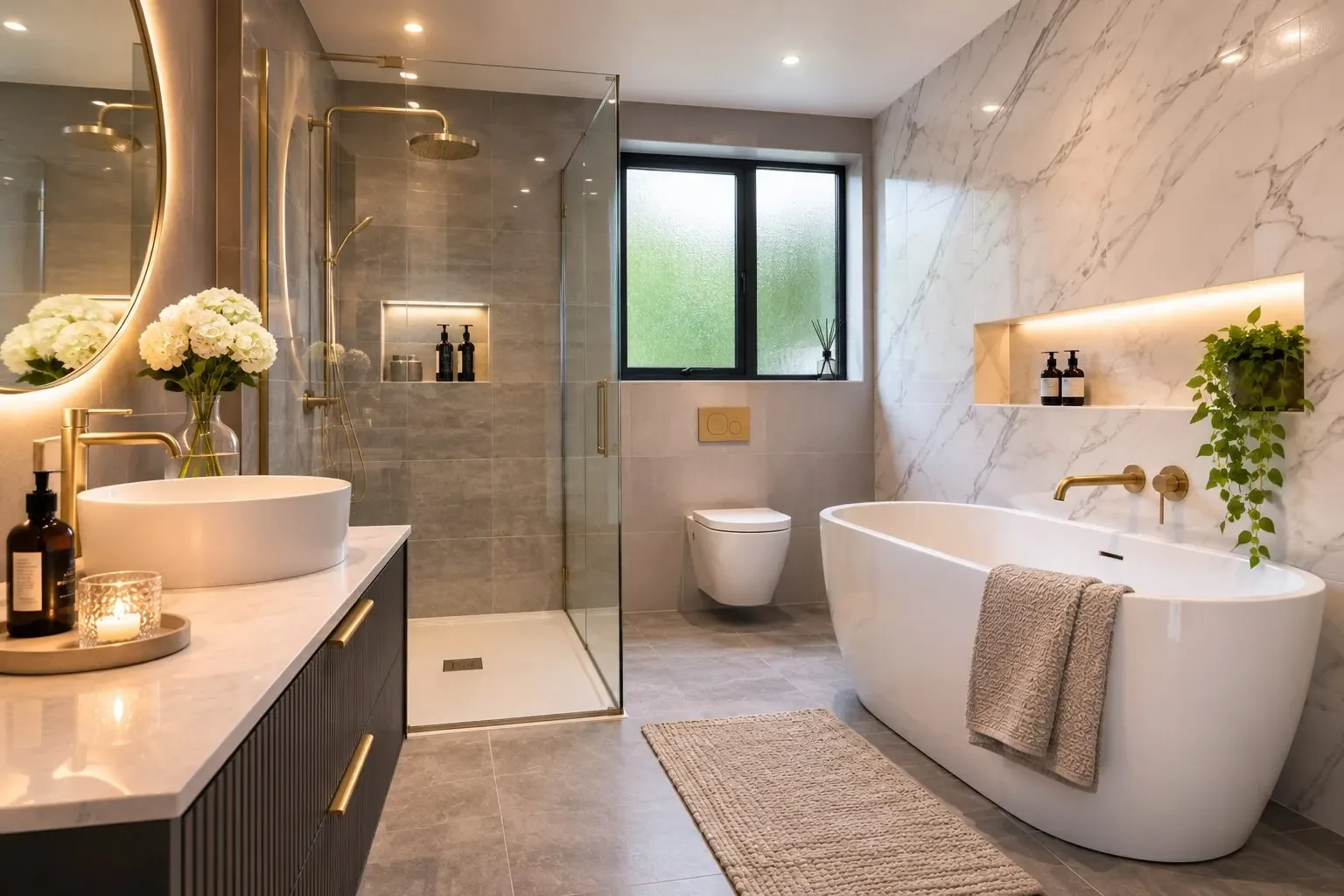
Refurbishment sits between a small repair and a complete redesign. It may include replacing sanitaryware, renewing wall finishes, improving storage or updating a worn shower arrangement while keeping much of the existing plumbing layout. ## Deciding What to Retain The first question is whether the existing components are suitable for reuse. A bath or toilet might still be serviceable, while the basin unit, flooring or shower screen needs replacing. Keeping fixtures in their present positions can simplify planning, but their condition and compatibility with new materials must be assessed. Surface condition also matters. New finishes should not conceal loose tiles, damp surfaces or failed waterproofing. Where an underlying issue is present, the refurbishment should address it rather than cover it. ## Refurbishment Planning for Occupied Homes A partial refurbishment can still involve several dependent jobs. For example, new wall tiles may require the basin or bath to be loosened, while changing flooring can affect the finished height around the toilet and shower tray. Before choosing replacements, ask the contractor to identify what needs to be removed and how the remaining fixtures will be protected. This avoids assuming that a cosmetic update can always be completed without disturbing the existing installation. If the bathroom is the only one in the house, discuss access to essential facilities before work is booked. It is worth asking when water will be turned off, whether the toilet can remain usable for part of the work and how materials will be brought into the property. In Prestwich's older terraces and converted properties, access routes can be as important as the size of the room itself. ## Making Refurbishment Worthwhile Think beyond the colour of the new tiles. Replacing cracked silicone is different from remedying repeated water penetration, and fitting a modern vanity does not make sense if the wall cannot safely support it. A sensible specification should distinguish work that improves appearance from work that addresses a functional problem. Ask for clarity about which existing fittings are being reused, who supplies replacement products, what happens if concealed damage is found and who is responsible for disposal. An independent bathroom contractor can assess the room and provide a quotation based on the agreed scope. A clear brief makes those conversations more useful and helps avoid paying for unnecessary changes.
Replace dated sanitaryware with suitably sized modern fittings while considering existing pipe positions and the available room.
Renew worn surfaces with appropriate materials, paying attention to substrate preparation and the demands of wet areas.
Choose flooring that suits moisture exposure, cleaning requirements and the condition of the existing floor.
Introduce practical storage to reduce clutter and improve the organisation of toiletries, towels and cleaning supplies.
Replace tired enclosures where the existing shower arrangement can be retained safely and effectively.
We look at which changes would genuinely improve everyday use rather than assuming every component must be replaced.
We consider the surfaces and services that remain part of the refurbished bathroom.
Products should suit the available dimensions and connect appropriately to existing arrangements.
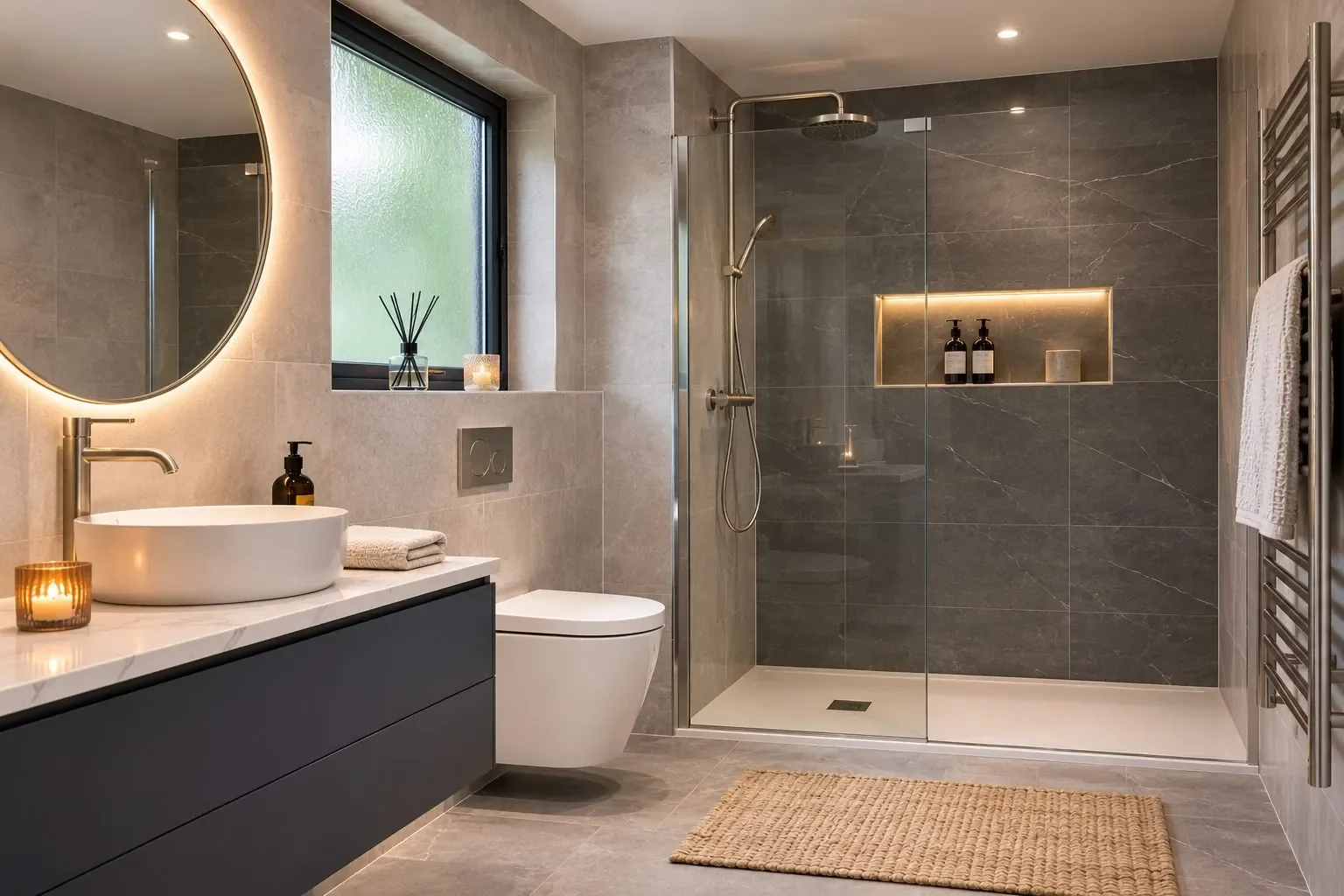
Explain what you would like to keep and what you want to refresh.
Free — no obligations
List the worn finishes, awkward fittings and maintenance problems.
Consider what can reasonably remain and what should be replaced.
Check measurements, compatibility and the required preparation.
Remove and renew the agreed elements in a sensible sequence.
Review function, fit and visible finishing details.
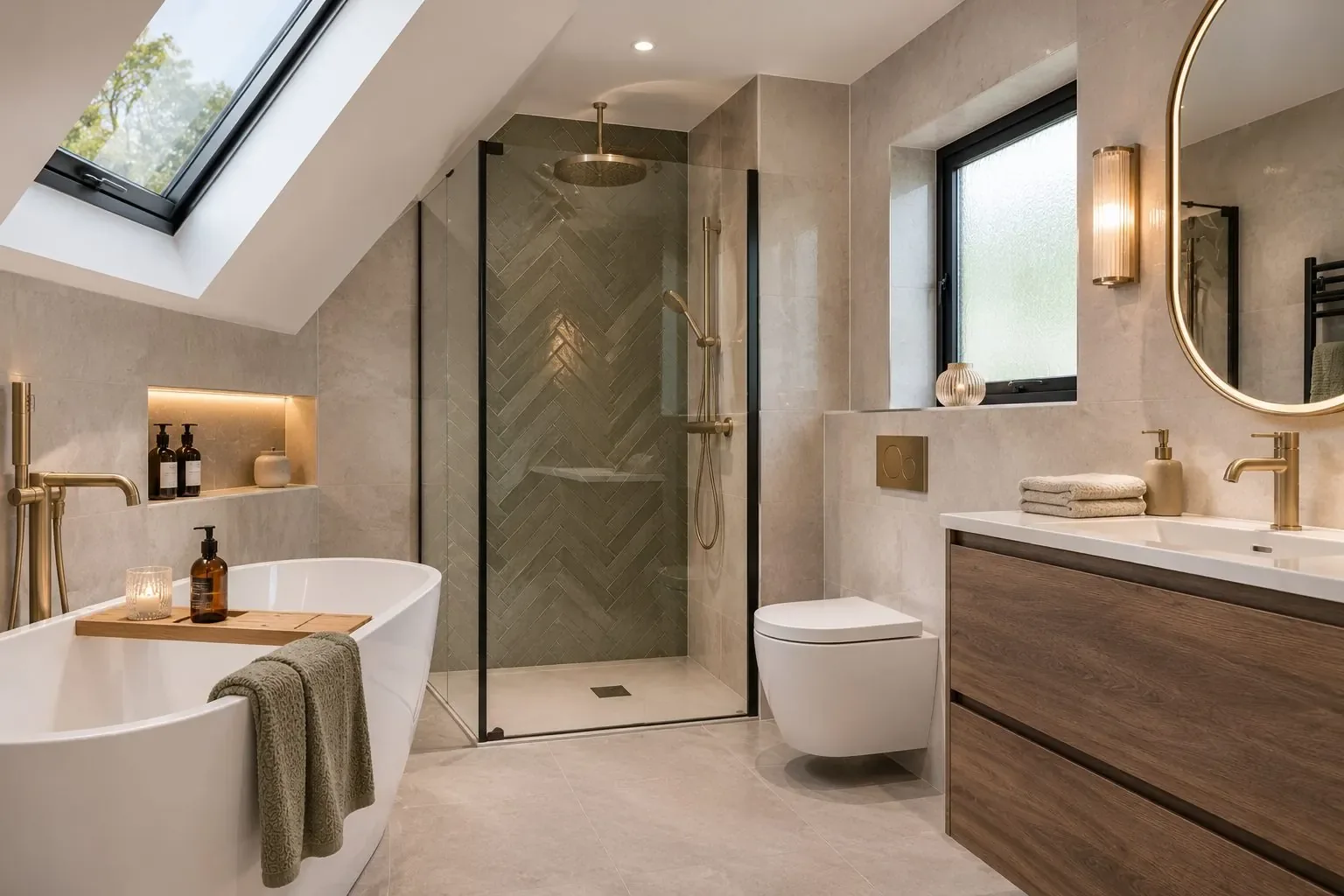
Refurbishment usually concentrates on improving an existing bathroom without necessarily changing its basic layout. A full renovation may involve more extensive alterations to plumbing, surfaces and fixtures. The distinction depends on the actual scope of work.
That may be possible if the existing suite is sound and suitable for the proposed finish. Removing old tiles can affect nearby fixtures and seals, so careful planning is important. The condition of the walls also needs checking.
The source of the leak should be identified before deciding on a cosmetic refurbishment. Failed waterproofing or damaged materials may require more extensive work. Covering the affected area without correcting the cause could lead to further problems.
Often, although cabinet dimensions and pipe access need consideration. Some furniture requires alterations to accommodate existing connections. Product measurements should be checked before ordering.